
2009 Ford Flex Engine for Sale: Complete Buyer's Guide
Postet av Eliza Beth den 7. mai 2026
Introduction
If you are searching for a 2009 Ford Flex engine , you are working to keep one of Ford's most distinctive and practical family vehicles on the road. The Ford Flex debuted in 2009 as a bold, boxy three-row crossover that stood apart from the sea of rounded SUVs with its retro-inspired styling and genuine family functionality. When the engine develops serious problems, finding the right 2009 Ford Flex replacement engine is the most economical path to restoring your vehicle's reliability. This guide covers the engine options, common failure points, sourcing strategies, and total costs involved in engine replacement.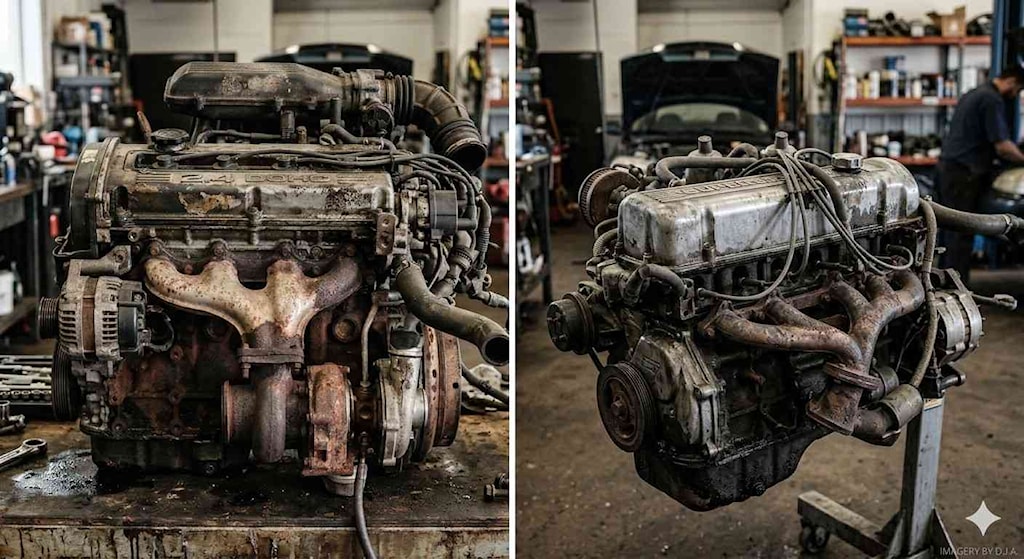
What Engine Does the 2009 Ford Flex Use?
The 2009 Ford Flex was offered with two engine configurations:
3.5L Duratec V6 (Cyclone) — The standard engine producing 262 horsepower and 248 lb-ft of torque. This naturally aspirated V6 is shared with the Ford Taurus, Ford Edge, Lincoln MKX, and Ford Fusion V6. It is the most commonly searched engine when buyers look for a 2009 Ford Flex 3.5L engine for sale .
3.5L EcoBoost twin-turbocharged V6 — The optional performance engine producing 355 horsepower and 350 lb-ft of torque, available in the Limited trim. This is one of the earliest applications of Ford's EcoBoost technology in a family crossover. Engine code TI-VCT with EcoBoost designation.
Confirming which engine is in your Flex is essential before ordering any replacement. The naturally aspirated 3.5L and the EcoBoost 3.5L are not interchangeable due to different internal components, turbocharger systems, and engine management calibrations.
Common 2009 Ford Flex Engine Problems
Understanding what typically fails in the 2009 Ford Flex engine helps you make a smarter replacement purchase:
Timing chain stretch and tensioner wear — Both the naturally aspirated and EcoBoost versions of the 3.5L use timing chains. Stretched chains produce rattling on cold startup and can cause variable cam timing errors, triggering check engine lights with codes related to cam position correlation.
Phaser and variable cam timing issues — The 3.5L uses variable cam timing on both intake and exhaust camshafts. Worn phasers cause rough idle, reduced power, and cam timing fault codes including P0012, P0022, P0016, and P0017.
Oil leaks from valve cover gaskets — The plastic valve covers and their gaskets are prone to leaking at higher mileages. Oil leaks onto the exhaust manifold create a burning smell and fire risk if ignored.
Coolant system failures — The 3.5L's plastic coolant crossover tubes and thermostat housing are documented failure points that can cause sudden coolant loss and overheating.
EcoBoost-specific turbocharger issues — The twin-turbo EcoBoost variant can develop turbo boost leaks from the charge pipes and intercooler connections. Turbocharger bearing wear is also documented at higher mileages, particularly in vehicles that were not allowed to idle for 60 seconds before shutdown after hard use.
Carbon buildup on intake valves — As a direct-injection engine, the 3.5L accumulates carbon on the back of the intake valves over time. Walnut blasting every 60,000 to 80,000 miles is the recommended remedy.
High mileage internal wear — At 150,000-plus miles, ring and bearing wear can make engine replacement more economical than individual repairs.
Remanufactured vs. Used 2009 Ford Flex Engine
When searching for a 2009 Ford Flex engine , your two main options are:
Used naturally aspirated 3.5L — Sourced from salvage Taurus, Edge, MKX, or Flex vehicles. Pricing typically ranges from $800 to $2,000 depending on mileage and timing chain status. Broadly available due to the engine's use across multiple popular Ford and Lincoln platforms.
Used EcoBoost 3.5L — More expensive and harder to find due to fewer donor vehicles. Typically priced from $2,500 to $5,500 depending on mileage and turbocharger condition.
Remanufactured 3.5L naturally aspirated — Fully rebuilt with new timing chains, seals, bearings, and gaskets. Priced from $2,500 to $4,500. The best choice for owners planning to keep the Flex long-term.
Remanufactured EcoBoost 3.5L — Significantly more expensive at $5,000 to $9,000 due to the turbocharger system complexity.
What to Inspect Before Buying a 2009 Flex Engine
Before purchasing any used Ford Flex 3.5L engine , verify:
Timing chain and phaser condition — The most important check. Ask for cold-start video or inspection records showing chain and phaser health.
Compression test results across all six cylinders — Even readings confirming combustion chamber integrity.
Oil condition at extraction — Clean oil is a positive indicator.
For EcoBoost units, turbocharger condition — Check shaft play and inspect for oil contamination around the compressor housings.
Coolant crossover tube condition — The plastic tubes should be inspected for cracks or brittleness.
Fault code history — Ask the seller to confirm no active cam timing or timing chain codes were stored in the PCM.
Installation Cost for the 2009 Ford Flex Engine
Engine replacement in the 2009 Flex is moderately complex due to the transverse V6 layout and the accessory-dense engine bay. Independent shops typically charge $1,200 to $2,000 in labor. Simultaneously replacing the timing chain system components, coolant crossover tubes, thermostat, and spark plugs is strongly recommended and adds $500 to $1,000 in parts. Total project costs with a quality used naturally aspirated engine typically run $2,500 to $5,000. With the EcoBoost the total ranges from $5,000 to $10,000.
Frequently Asked Questions
How long does a 2009 Ford Flex engine last? The naturally aspirated 3.5L can reach 200,000 miles with regular maintenance. The EcoBoost typically reaches 150,000 to 180,000 miles with proper care.
What other vehicles share the 2009 Ford Flex 3.5L engine? The naturally aspirated 3.5L was used in the Ford Taurus, Ford Edge, Ford Fusion V6, and Lincoln MKX. The EcoBoost 3.5L went on to power the F-150, Explorer, and many other Ford products in later years.
Does the 2009 Ford Flex have a timing belt or chain? Both the naturally aspirated and EcoBoost 3.5L engines use timing chains. No belt replacement interval applies, but chain and phaser service is critical.
What is the difference between the base and EcoBoost Flex engines? The base 3.5L is naturally aspirated producing 262 horsepower. The EcoBoost adds twin turbochargers for 355 horsepower. The two are not mechanically interchangeable.
What oil does the 2009 Ford Flex use? Ford recommends 5W-20 fully synthetic oil for the naturally aspirated 3.5L and 5W-30 for the EcoBoost. Always use the correct specification to protect the variable cam timing system.
Turbo Auto Parts: 2009 Ford Flex Engines in Stock
Turbo Auto Parts stocks a comprehensive range of 2009 Ford Flex engines for sale , covering both the naturally aspirated 3.5L and the EcoBoost twin-turbo variant. We source engines from documented donor vehicles across compatible Ford and Lincoln platforms, inspect timing chain and phaser condition, and back every sale with our warranty program. Our Ford powertrain specialists are ready to confirm compatibility and answer technical questions before you order. Shop Turbo Auto Parts today and get your Flex back on the road.
Logg inn for å skrive en kommentar.

