How to Integrate SLA and FDM Printers in the Classroom
Postet av Post Sphere den 6. jun 2026
Three-dimensional printing has rapidly evolved from a niche industrial tool into a transformative classroom technology. Schools across the globe are discovering that putting manufacturing power directly into students' hands sparks creativity, deepens understanding of complex concepts, and builds real-world skills that traditional instruction alone cannot deliver. Yet educators frequently find themselves stuck at a crossroads: should they invest in SLA printers for their remarkable detail, or choose FDM machines for their rugged simplicity and lower running costs? The answer, increasingly, is both. This guide offers a practical roadmap for teachers and students who want to harness the complementary strengths of Stereolithography and Fused Deposition Modeling within a single learning environment. Whether you're building a makerspace from scratch or expanding an existing lab, the strategies ahead address the realities educators care about most—affordable entry points, manageable workflows, and curriculum-ready resources that justify every dollar spent.
SLA vs FDM: A Comparative Overview for Educators
Before committing budget dollars to any desktop 3D printer, educators benefit from understanding what each technology actually does at a mechanical level. Stereolithography uses a UV laser or LED array to cure liquid photopolymer resin layer by layer, producing parts with exceptionally fine surface detail—often down to 25-micron layer heights. Fused Deposition Modelling, by contrast, melts thermoplastic filament and deposits it through a heated nozzle, building objects with visible layer lines but impressive structural integrity. Resolution favors SLA; material toughness and variety favor FDM. Speed depends on geometry, although FDM generally handles larger prints more economically while SLA excels at batches of small, intricate pieces. Post-processing also differs significantly: SLA parts require washing in isopropyl alcohol and additional UV curing, whereas FDM prints typically only need support removal and optional sanding. Both technologies now occupy the consumer models segment, with machines sized for a classroom tabletop and priced within reach of most school budgets.
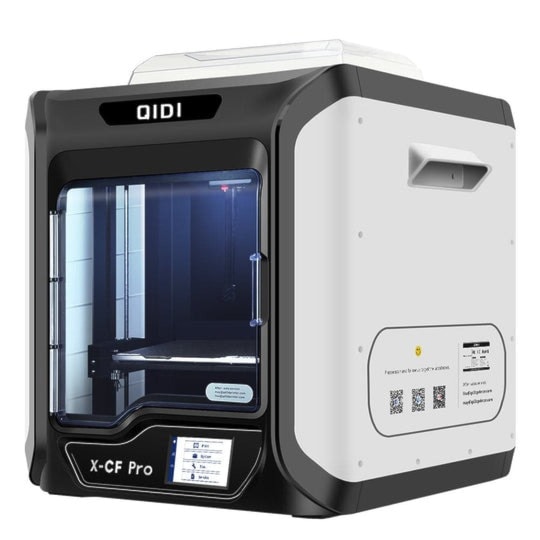
Understanding SLA Printing: Precision and Applications
SLA's defining advantage is dimensional accuracy. When a biology teacher needs a cross-section of a human heart with clearly visible valve structures, or an art instructor wants students to reproduce miniature sculptures with crisp undercuts, resin printing delivers results that FDM simply cannot match at the same scale. The technology also produces smooth surfaces straight off the build plate, reducing finishing time for display-quality pieces. However, resin handling demands respect. Uncured photopolymer is a skin sensitizer, so nitrile gloves, safety glasses, and adequate ventilation are non-negotiable in any education or laboratory setting. Schools should designate a contained workstation—ideally near a window or fume extractor—where washing and curing happen away from general traffic.
Understanding FDM Printing: Durability and Versatility
FDM printers shine where strength, size, and material choice matter most. Students designing bridge trusses for a physics challenge or fabricating custom jigs for a robotics team need parts that withstand mechanical stress, and thermoplastics like PLA, PETG, and TPU deliver exactly that. The filament ecosystem is enormous: wood-fill composites for art, conductive PLA for electronics projects, and flexible TPU for wearable prototypes all load into the same machine. Operationally, FDM is forgiving. Many consumer models now include automatic leveling, filament runout sensors, and resume-after-power-loss features that minimize failed prints and teacher intervention. Consumable costs remain low—a single spool of PLA can fuel dozens of student projects—making FDM the workhorse that keeps a makerspace running day after day without straining the supply budget.
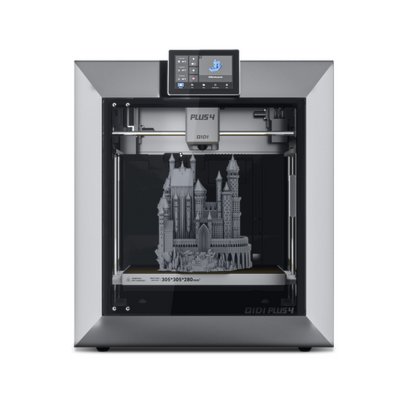
Why Both SLA and FDM Printers Belong in the Classroom
Educators searching for affordable options for educational purposes often feel pressured to pick one technology and commit. That thinking limits what students can accomplish. A classroom equipped with both SLA and FDM printers mirrors the reality of professional design studios, where engineers select the right tool for each task rather than forcing every problem through a single workflow. Understanding the differences between an sla 3d printer vs fdm helps educators make informed purchasing decisions. The pairing creates a natural division of labor: SLA handles anything requiring fine detail and smooth finish, while FDM tackles functional parts that must bear loads, snap together, or survive repeated handling by curious hands.
Consider a tenth-grade biology unit on cellular structure. An SLA printer can produce a translucent model of a mitochondrion with internal cristae clearly visible at a scale students can hold and rotate—something impossible to appreciate from a textbook diagram alone. Meanwhile, the same class might use an FDM machine to build a large-scale, color-coded organelle assembly that snaps together like a puzzle, reinforcing spatial relationships through tactile interaction. In an engineering elective, students prototype a gear train: SLA delivers test gears with precise tooth profiles for fit-checking, and FDM produces the final housing in durable PETG that survives stress testing. This complementary approach enriches STEM and STEAM education by teaching students not just how to design, but how to choose the manufacturing method that best serves their intent—a decision-making skill directly transferable to careers in product development, healthcare, architecture, and beyond.
Step-by-Step Guide to Integrating SLA and FDM Printers
Moving from theory to practice requires a structured approach. Educators who follow a clear sequence—from space planning through first student prints—avoid the common pitfalls that leave expensive equipment gathering dust in a storage closet.
Setup and Safety Protocols
Begin by auditing your available space. SLA and FDM printers have different environmental needs, and placing them thoughtfully prevents problems before they start. FDM machines tolerate open classroom placement on any sturdy table, though a location away from drafty windows reduces warping on taller prints. SLA printers demand more deliberate positioning. Uncured resin emits volatile organic compounds, so place resin machines near a window with an exhaust fan or install a dedicated fume extractor ducted to the outside. A stainless steel or silicone-mat-covered workstation adjacent to the printer should hold the wash-and-cure station, a supply of nitrile gloves, safety glasses, and paper towels. Label this zone clearly and establish a rule: no one handles resin equipment without personal protective equipment on. Post laminated safety cards at eye level summarizing emergency steps for skin contact and spills. For budget assessment, map your total available funds against three categories—hardware, consumables for the first semester, and safety infrastructure—allocating roughly sixty, twenty-five, and fifteen percent respectively.
Operational Workflow for Mixed Use
Once hardware is in place, create a rotation system that gives every student meaningful interaction with both technologies. A practical model divides the week: Monday through Wednesday the FDM printers run student projects queued through a shared slicer station, while Thursday and Friday are reserved for SLA jobs that require supervised resin handling. Students submit print requests digitally, specifying why they chose SLA or FDM—a brief justification that reinforces decision-making skills. Assign rotating "print technicians" each week; these students handle bed preparation, file transfer, and post-processing under teacher guidance. Before any machine runs, require a five-minute calibration check: for FDM, verify bed level using the automatic leveling feature common on modern desktop 3D printers from manufacturers like QIDI Tech, and confirm filament is loaded without tangles. For SLA, inspect the resin vat for cured debris and ensure the build plate is clean. Initial test prints should be small, fast objects—a calibration cube for FDM, a detail-rich coin for SLA—so students observe each technology's characteristics without committing hours of machine time. Document results in a shared class log, building institutional knowledge that future cohorts inherit.
Curriculum Integration: Projects and Lesson Plans
The most compelling justification for any classroom technology is its direct connection to learning objectives. Fortunately, dual-technology 3D printing opens project possibilities across nearly every subject area, giving educators rich resources for integrating 3D printing into curriculum without forcing artificial connections.
In biology, students can SLA-print translucent cell models that reveal organelle placement at a level of detail impossible with hand-built dioramas, then use FDM to create enlarged, color-coded skeletal joints that classmates physically articulate during anatomy discussions. History classes benefit when students research ancient artifacts—a Roman oil lamp, an Egyptian scarab—and reproduce them on the SLA printer with museum-quality surface texture, sparking conversations about material culture that a photograph never could. Mathematics teachers find FDM invaluable for printing geometric solids, cross-sectional slicers, and function-surface visualizations that students rotate in their hands to grasp concepts like volume of revolution or conic sections intuitively.
Engineering and design courses naturally pair both technologies within a single capstone project. A lesson plan framework might unfold over three weeks: week one covers research and CAD modeling, week two assigns students to justify their manufacturing choice in a written rationale before printing prototypes on the appropriate machine, and week three involves testing, iterating, and presenting findings. Art instructors can structure similar progressions around jewelry design or architectural maquettes. Educators seeking ready-made lesson scaffolds should explore communities like Printables Education, NIH 3D Print Exchange for anatomical models, and the YouMagine teacher hub, where shared project files and aligned standards documents reduce preparation time considerably.
Cost-Effective Strategies and Maintenance Tips
Stretching a limited budget starts with smart purchasing habits. Many filament and resin suppliers offer educational discounts or bulk pricing when schools order by the case rather than individual units—savings of fifteen to twenty percent are common. Sharing printers across multiple classes or departments distributes the cost per student and keeps machines productive throughout the school day rather than sitting idle. Maintenance directly protects that investment. For FDM machines, a weekly routine of cleaning the build surface with isopropyl alcohol, inspecting the nozzle for partial clogs, and lubricating linear rails prevents the gradual degradation that leads to failed prints and wasted material. Automatic leveling features on modern consumer models eliminate one of the most common failure points, so prioritize machines equipped with this capability when purchasing. SLA printers need their resin vats checked for clouding or micro-cracks every few weeks, and the UV-transparent film replaced on a regular cycle. Keep resin bottles sealed and stored away from light to extend shelf life well beyond the printed expiration date. Finally, track consumable usage in a simple spreadsheet—knowing exactly how much material each class period consumes helps forecast next semester's supply order and justifies budget requests with hard data administrators appreciate.
Building a Dual-Technology Makerspace for Future-Ready Students
Integrating both SLA and FDM printers into a single classroom environment gives educators a powerful instructional toolkit that no single technology can provide alone. SLA delivers the precision needed for anatomical models, historical reproductions, and any project where surface detail communicates meaning, while FDM supplies the durability, material diversity, and low per-part cost that keep a makerspace productive across dozens of daily student interactions. Together, they teach something beyond the subject matter of any one lesson: the professional habit of selecting the right manufacturing process for a given design intent. Students who practice this decision-making develop transferable engineering judgment that serves them in college coursework and careers alike. The affordability barrier continues to fall as consumer models from brands such as QIDI Tech gain features once reserved for industrial hardware, and growing libraries of shared lesson plans mean no teacher has to build curriculum from scratch. Schools that commit to a dual-technology approach today position their students at the leading edge of hands-on learning—ready to design, iterate, and innovate in ways that will only expand as additive manufacturing matures in the years ahead.
Logg inn for å skrive en kommentar.