From Bleachers to Broadband: Why Sports Infrastructure Is the Most Underrated Investment of Our Time
Postet av Post Sphere den 12. mai 2026
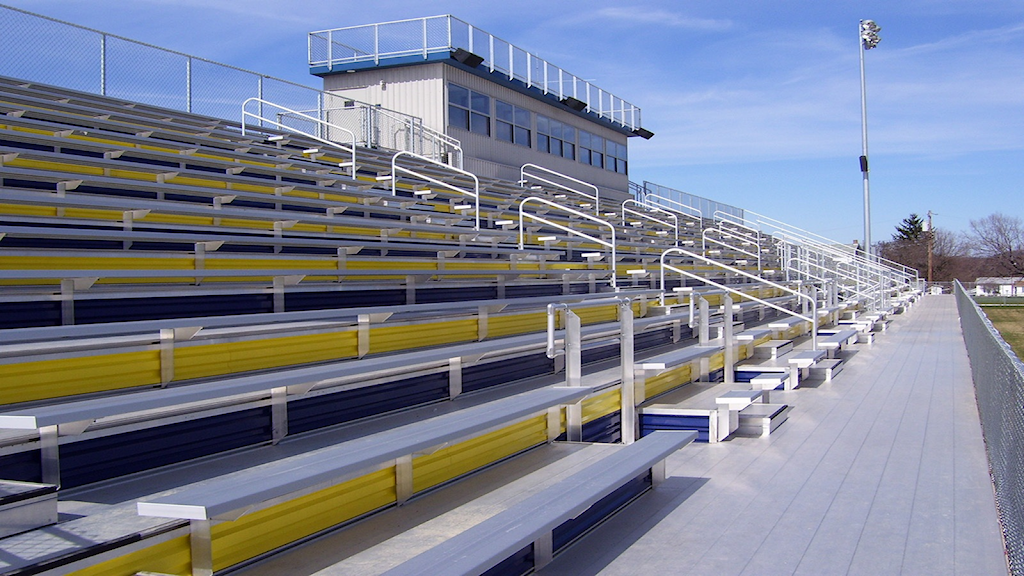
There's a moment every sports fan knows: the collective held breath before a stadium roars. The creak of bleachers under a sold-out crowd. The floodlights snapping on as dusk falls over a pitch. These are the sensory textures of sport — and they're only possible because someone, somewhere, built the infrastructure to hold them.
But sports infrastructure is rarely discussed for what it truly is: one of the most consequential and complex categories of public and private investment on the planet.
It's time to change that conversation.
More Than Concrete and Steel
When most people hear "sports infrastructure," they picture stadiums. Giant bowls of steel and polycarbonate that host 80,000 people on Saturday afternoons and sit empty the other six days of the week. Critics of sports infrastructure spending often stop here — and they're not entirely wrong to.
But modern sports infrastructure is far broader. It encompasses:
- · Grassroots facilities — community pitches, local swimming pools, neighborhood courts, school gyms
- · Training and elite performance centers — where the next generation of athletes is forged
- · Digital and broadcast infrastructure — the fiber networks, OB trucks, and streaming pipelines that deliver sport to billions
- · Transport and access corridors — the roads, metro lines, and cycling paths that make venues reachable
- · Health and wellness infrastructure — the physiotherapy clinics, altitude chambers, and sports medicine centers attached to serious clubs
Think of it less as a stadium and more as an ecosystem. The stadium is the cathedral; the rest is the city that makes the cathedral possible.
The Economic Multiplier Nobody Talks About
Critics of publicly funded mega-stadiums have robust evidence on their side. The academic literature is fairly consistent: the direct economic returns of large venue construction are often overstated by promoters and underwhelming in practice.
But this critique — valid as it is — gets weaponised too broadly, and ends up casting doubt on all sports infrastructure investment. That's a mistake.
Consider the grassroots layer. A synthetic turf pitch in a mid-size city costs roughly ₹1–3 crore to build and a fraction of that to maintain annually. It generates bookings from schools, corporate leagues, amateur clubs, and weekend warriors fifty weeks a year. It reduces healthcare costs by keeping populations active. It provides a safe, supervised space that keeps young people engaged. The returns, properly measured, are substantial — they're just distributed across public health budgets, local economies, and social outcomes rather than a single P&L.
Or consider elite training facilities. When a state-of-the-art performance center opens, it doesn't just serve the first team. It attracts international teams on pre-season tours. It hosts coaching clinics. It seeds a local ecosystem of sports science professionals, nutritionists, physios, and analysts. The Birmingham area saw this effect after the 2022 Commonwealth Games — the event left behind upgraded venues that became year-round hubs of sporting activity and sports tourism.
India's Infrastructure Moment
For readers in India, this conversation has a particular urgency.
India is currently in the midst of what may be the most ambitious sports infrastructure build-out in its history. The push towards hosting more major international events — combined with the extraordinary commercial success of leagues like the IPL, ISL, Pro Kabaddi League, and PKL — has created genuine momentum.
But the challenge is well-documented: a massive pyramid imbalance. India has some genuinely world-class venues at the top — the Narendra Modi Stadium in Ahmedabad, the refurbished Eden Gardens, modern hockey complexes in Bhubaneswar — but the base of the pyramid, the grassroots layer, is thin and underfunded.
For every aspiring cricketer in rural Maharashtra who has access to a proper pitch and coaching, there are dozens who don't. For every young footballer in Kolkata's storied clubs, there are hundreds in smaller towns playing on broken ground with improvised goalposts.
The policy priority should be clear: the return on investment in grassroots infrastructure — in quality pitches, coaching academies, and basic sports science support at the district level — dwarfs the return on another marquee stadium.
The Technology Transformation
Sports infrastructure is also being reshaped by technology in ways that weren't conceivable a decade ago.
Smart stadiums now use real-time crowd flow analytics to eliminate bottlenecks, dynamic pricing systems to optimize revenue, and sensor networks that monitor structural integrity continuously. The Tottenham Hotspur Stadium in London is often cited as a benchmark — a venue designed not just for football, but for NFL, concerts, e-sports, and corporate events, with the technology backbone to support each.
Synthetic surfaces have transformed grassroots football, hockey, and tennis. The FIFA Quality Program for Football Turf has enabled year-round play in climates where natural grass was impossible to maintain, and costs have dropped dramatically as technology has matured.
Digital infrastructure is, in many ways, the most underappreciated dimension. A sporting event today is simultaneously a broadcast product, a social media moment, a betting market, a fantasy sports input, and a data source. The stage that cannot support 50,000 simultaneous 5G connections or provide reliable broadcast-quality fibers is, commercially speaking, already obsolete.
Sustainability: The Non-Negotiable Frontier
The sports industry has a carbon problem — and it knows it. Long-haul travel for players and fans, energy-intensive floodlit facilities, single-use plastics at concession stands, the embodied carbon in concrete mega-structures: the footprint is real.
The good news is that sports infrastructure is increasingly being designed with sustainability at its core. The Paris 2024 Olympics made headline commitments to reduce its carbon footprint by 50% compared to previous Games, with a deliberate strategy of using existing and temporary venues. Brisbane 2032 is building on this, with sustainability embedded in venue planning from the outset.
At the facility level, we're seeing solar-panelled roofs, rainwater harvesting systems, LED lighting that uses a fraction of traditional floodlight energy, and ground-source heat pumps. These aren't just ethical choices — they're economic ones. Energy costs are a major operational burden for any large venue; reducing them improves the long-term financial sustainability of the facility.
What Good Sports Infrastructure Policy Looks Like
If I were advising a government or a sports federation on infrastructure strategy, I'd offer five principles:
1. Pyramid before pinnacle. Build the grassroots layer before the showpiece. Elite infrastructure sits on the foundation of mass participation. Without that foundation, it's a monument to aspiration, not a system that produces athletes or fans.
2. Multi-use from day one. Design flexibility into every facility. A stadium that only hosts football six months a year is a cost centre. A stadium designed for concerts, community events, e-sports, and conferences is an asset.
3. Connect the dots. Venues without transport links fail. Infrastructure investments in sport must be bundled with investments in access — public transport, cycling infrastructure, pedestrian-friendly surrounds.
4. Measure what matters. Move beyond GDP impact studies commissioned by promoters. Measure participation rates, health outcomes, local employment quality, and long-term asset utilization. The real returns are there — they just require honest accounting.
5. Maintain, don't just build. India's Rajiv Gandhi Khel Ratna centers and SAI campuses have sometimes struggled with maintenance. A world-class track that degrades over five years produces worse outcomes than a good-quality track maintained impeccably for thirty. Funding maintenance is as important as funding construction.
The Bigger Picture
Sport matters because it matters to people — deeply, irrationally, beautifully. It shapes identity, creates community, provides shared reference points across otherwise divided societies. The infrastructure that enables sport is, in this sense, not merely functional. It is cultural.
When a city invests seriously in sports infrastructure — when it builds that floodlit pitch in the neighbourhood, when it refurbishes the community pool, when it creates the training center that keeps young athletes close to home — it is making a statement about what kind of place it wants to be.
Logg inn for å skrive en kommentar.