Kategori
Arkiv
Advanced Jig and Fixture Design for Reliable CNC Production
Postet av Jack Ryan den 18. Feb 2026
Reliable CNC production is built on consistency, control, and repeatability. While machine accuracy and programming quality matter, long-term production stability depends heavily on how parts are held, located, and supported during machining. This is where jig and fixture design becomes a decisive factor. In demanding CNC environments, even minor positioning errors can multiply across batches, leading to scrap, rework, and delivery delays. A carefully engineered fixture strategy turns CNC capability into dependable output rather than occasional success.
In high-precision workshops, investing in jig and fixture design allows manufacturers to standardize setups and remove human variability from the machining process. Instead of relying on operator skill to achieve accuracy, engineered jigs and fixtures tooling defines exact part positioning for every cycle. This approach creates confidence in dimensional results, improves throughput, and supports scalable production without compromising quality.
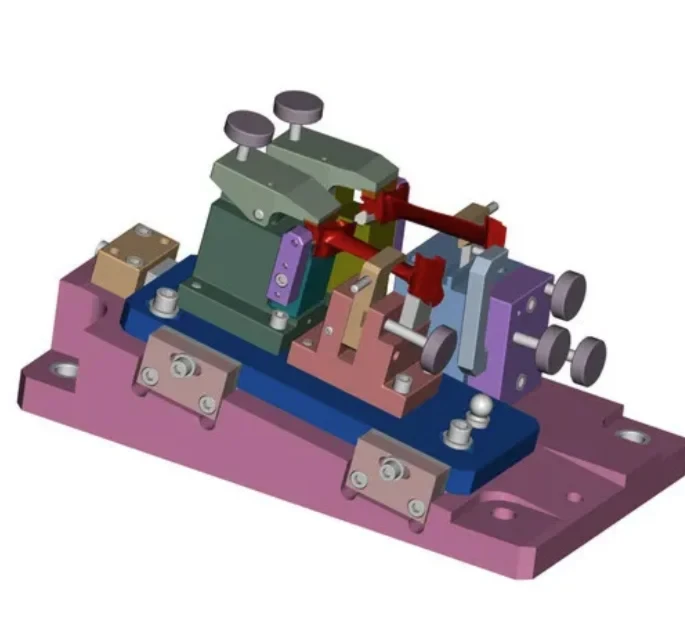
Understanding the Importance of Advanced Fixture Engineering
Why Fixture Design Directly Affects Production Reliability
CNC machines repeat what they are programmed to do, but fixtures determine whether the part is in the correct position when that program runs. Advanced jigs and fixtures control all degrees of freedom while resisting cutting forces and vibration. When fixtures are poorly designed, toolpaths may be correct yet still produce inconsistent parts. Reliable production depends on fixtures that behave predictably under real machining conditions.
Advanced fixture engineering focuses on reducing variation rather than simply holding a part in place. By defining stable datums and maintaining rigid support throughout the machining cycle, jig and fixture design devices create a repeatable physical environment. This reliability allows quality engineers to trust statistical process control data and reduces the need for excessive inspection.
The Link Between Fixtures and Process Capability
Process capability is not only a function of machine accuracy but also of setup repeatability. Even high-end CNC equipment cannot compensate for unstable or misaligned fixturing. Well-designed jigs and fixtures tooling increases Cp and Cpk values by reducing setup-induced variation.
When fixtures maintain consistent part location, tool wear becomes more predictable and offsets remain stable for longer periods. This stability supports longer unattended runs and enables manufacturers to meet tight tolerance requirements with confidence.
Core Design Principles for Advanced Jigs and Fixtures
Precision Location and Datum Strategy
Effective fixture design starts with a clear datum strategy. The part must be located from functional surfaces that align with design intent. Advanced jig and fixture design devices avoid unnecessary contact points that can over-constrain the part and introduce stress.
Precision location ensures that every machining operation references the same origin. This consistency simplifies programming, reduces cumulative tolerance stack-up, and supports multi-operation machining without repositioning errors.
Rigid Support and Controlled Clamping
Support placement is critical in advanced fixtures. Cutting forces must be transferred into the fixture body without allowing part deflection. Strategic support under critical features improves surface finish and dimensional accuracy.
Clamping should secure the part without distortion. Advanced jigs and fixtures tooling uses controlled clamping forces, often distributed across multiple points, to maintain stability while protecting part geometry. This balance is essential for reliable CNC production.
Designing Fixtures for High-Volume and High-Mix CNC Production
Fixture Strategies for Repeat Production Runs
High-volume CNC production demands fixtures that maintain accuracy over thousands of cycles. Wear-resistant materials, hardened locating elements, and replaceable wear components extend fixture life and protect repeatability. Jig and fixture design devices intended for volume production prioritize durability and ease of maintenance.
Consistency in loading is equally important. Fixtures should guide operators into correct placement automatically, reducing the chance of human error. This approach improves reliability across shifts and operators.
Flexibility for High-Mix Manufacturing Environments
In high-mix production, flexibility becomes a key design requirement. Modular jigs and fixtures tooling allows manufacturers to adapt to different part geometries without rebuilding fixtures from scratch. This flexibility reduces downtime and supports faster response to customer changes.
Advanced fixture systems often combine fixed datum structures with adjustable or interchangeable elements. This hybrid approach maintains precision while accommodating variation, supporting reliable output across various product lines.
Overcoming Common Challenges in Advanced Fixture Design
Managing Thin-Walled and Complex Components
Thin-walled parts are especially sensitive to clamping and cutting forces. Excessive pressure can distort geometry, while insufficient support leads to vibration. Advanced jig and fixture design devices address this challenge by supporting parts close to the cutting area and distributing forces evenly.
Techniques such as contour-matching supports, vacuum fixtures, and soft jaws tailored to part geometry help maintain dimensional integrity. These solutions allow reliable machining of delicate components without sacrificing productivity.
Avoiding Setup-Induced Errors and Variability
Many production issues originate during setup rather than machining. Poor fixture alignment, inconsistent clamping, and unclear loading procedures introduce variability. Advanced jigs and fixtures tooling reduces these risks through self-locating features and error-proofing design elements.
Clear fixture orientation, physical stops, and visual cues guide operators into correct setup. By designing fixtures that are difficult to misuse, manufacturers improve reliability and reduce dependence on individual skill levels.
Productivity Benefits of Advanced Jig and Fixture Design
Reducing Setup Time and Non-Productive Hours
Setup time is a major contributor to overall production cost. Advanced fixture design focuses on quick loading, minimal adjustment, and repeatable positioning. This reduces non-productive time without compromising accuracy.
Efficient jigs and fixtures tooling allows faster changeovers and supports lean manufacturing principles. Machines spend more time cutting and less time waiting, directly improving shop profitability.
Improving Tool Performance and Machining Stability
Stable fixturing improves cutting conditions. Reduced vibration extends tool life and maintains consistent surface finishes. Advanced jig and fixture design devices allow programmers to use optimized feeds and speeds with confidence.
Improved stability also reduces unexpected tool breakage and dimensional drift. This predictability supports reliable production schedules and reduces emergency downtime.
Materials and Construction in Advanced Fixture Systems
Selecting Materials for Stability and Durability
Material choice affects fixture rigidity, thermal behavior, and longevity. Steel offers strength and wear resistance, aluminum provides lightweight handling, and cast iron delivers vibration damping. Advanced jigs and fixtures tooling often combines materials to balance these properties.
Thermal stability is particularly important in long machining cycles. Fixtures must maintain dimensional integrity despite temperature changes caused by cutting heat and ambient conditions.
Precision Manufacturing and Assembly Practices
Even the best design fails without precise manufacturing. Advanced fixture components require tight tolerances and careful assembly to maintain alignment. Jig and fixture design devices benefit from precision grinding, accurate hole placement, and controlled assembly processes.
Quality construction ensures that fixture performance matches design intent. This attention to detail supports long-term reliability and reduces maintenance requirements.
Integrating Advanced Technology into Fixture Design
Digital Design and Simulation Tools
Modern fixture design increasingly relies on digital modeling and simulation. CAD-based analysis allows engineers to visualize clamping forces, identify weak points, and refine designs before production. This reduces trial-and-error and accelerates implementation.
Simulation-driven jig and fixture design devices align fixture performance with machining strategies. This integration improves first-pass success and supports predictable production outcomes.
Automation-Friendly Fixture Concepts
As CNC automation increases, fixtures must support robotic loading and palletized systems. Advanced jigs and fixtures tooling incorporates standardized interfaces, repeatable locating features, and robust clamping mechanisms suitable for automated handling.
Automation-ready fixtures enable lights-out machining and consistent quality without human intervention. This capability is essential for scalable and reliable CNC production.
Conclusion: Achieving Reliability Through Advanced Fixture Design
Reliable CNC production is not achieved by chance. It is the result of deliberate design decisions that control variation at every stage of the process. Advanced jig and fixture design provides the physical foundation needed to translate CNC precision into consistent output. By focusing on accurate location, rigid support, controlled clamping, and process alignment, manufacturers can build stability into their operations.
As tolerance demands tighten and production complexity increases, advanced jigs and fixtures tooling becomes a strategic asset rather than a simple accessory. Thoughtfully engineered fixture solutions reduce risk, improve efficiency, and enable CNC operations to perform with confidence and reliability over the long term.
Kommentarer
Logg inn for å skrive en kommentar.